
AstroAI L7 vs EPAuto: Cordless or 12V Tire Inflator, Which Should You Buy?
Cordless convenience versus never-dies 12V power.
We may earn a commission when you buy through links on this page. It never changes our verdicts. How we make money.
What we love
- Cordless: no socket, no cord, no engine running
- Under 1 lb and glovebox-sized
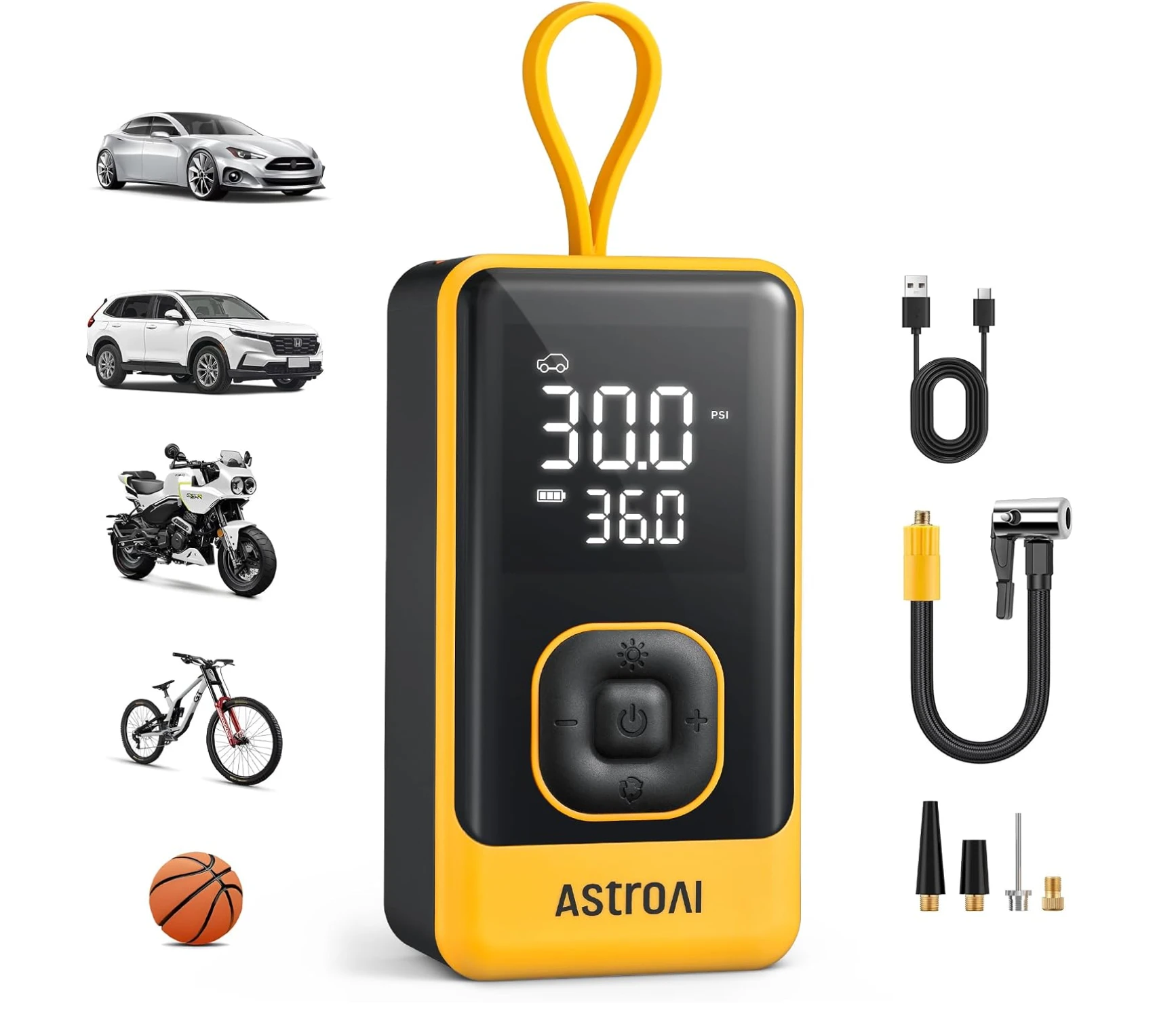
- Presets for car, moto, bike and balls
What bugs us
- EPAuto is cheaper and never needs charging
- Battery limits how many tires you can do per charge
The AstroAI L7 and the EPAuto 12V compressor are two of the most popular tire inflators on Amazon. Both have digital gauges and auto shut-off. The big difference is where the power comes from: a built-in battery versus your car’s 12V socket.
Short answer: AstroAI L7 if you want grab-and-go convenience in a tiny package. EPAuto if you want the cheapest option that never runs out of juice.
Head-to-head specs
| AstroAI L7 | EPAuto 12V DC | |
|---|---|---|
| Power | Built-in 4000mAh battery (cordless) | Car 12V socket (corded) |
| Max pressure | 150 PSI | Rated for car/SUV tires |
| Weight | Under 1 lb | Heavier, with cord |
| Display | Digital, PSI/Bar/kPa/kg/cm² | Digital, PSI/kPa/Bar/kg/cm² |
| Auto shut-off | Yes | Yes |
| Presets | Car, moto, bike, ball + custom | No |
| Light | Flashlight | LED flashlight |
| Truck tires | Not ideal | Not supported (per EPAuto) |
| Price (approx.) | ~$40–60 | ~$25–35 |
Specs per the manufacturers at time of writing.
Round 1: Portability — AstroAI wins
Under a pound, no cord, fits in a glovebox. The L7 goes anywhere: bike rack, gym bag, garage shelf. The EPAuto is still compact, but it’s tethered to your car by its power cord.
Round 2: Runtime — EPAuto wins
The EPAuto draws power from your car’s 12V socket, so as long as the car is running, it keeps going. The L7 is limited by its battery (per AstroAI, around 8 car tires from 30 to 36 PSI per charge), and if you forgot to charge it, it’s a paperweight.
Round 3: Features — AstroAI wins
Both have a digital gauge, auto shut-off, multiple pressure units and a light. The L7 adds four presets (car, motorcycle, bicycle, ball) plus custom, which makes switching between the car and the bike quick.
Round 4: Versatility off the car — AstroAI wins
Pumping a bike tire in the garage or a football at the park? The L7 just works. The EPAuto needs a 12V socket, which means your car has to be nearby.
Round 5: Value — EPAuto wins
The EPAuto is usually the cheaper of the two, and with a massive pile of owner reviews behind it, it’s a proven bargain. It also has overheat protection built in.
Get the AstroAI L7 Check EPAuto price
One thing neither does well
Neither is built for big pickup or LT tires. EPAuto says outright that it doesn’t support truck tires and is aimed at vehicles with engines under 3.5L. If that’s you, look at the ETENWOLF VORTEX S6 or the VIAIR 88P.
Quick safety note
Whichever you buy, inflate to the PSI on your door-jamb sticker, not the max number on the tire sidewall. And let small inflators rest between tires so they don’t overheat.
Who should buy which
Buy the AstroAI L7 if… you want something tiny that lives in the glovebox, and you also pump bikes, balls or motorcycle tires.
Buy the EPAuto if… you want the cheapest reliable option and hate the idea of charging one more gadget.
The verdict
AstroAI L7 wins, 3 rounds to 2. The EPAuto is cheaper and never runs flat, but the L7’s cordless, sub-1-lb convenience means it’s the one you’ll actually reach for. Buy the EPAuto if budget is king.
See the full lineup in our 10 best portable air compressors, or read why the AstroAI L7 is a must-have.
Keep Reading
The 10 Best Portable Air Compressors and Tire Inflators of 2026
A low tire at 11pm in a gas station with a broken air machine is a special kind of misery. Here are the 10 best portable tire inflators, from pocket-size cordless to off-road beasts.
Hanes vs Calvin Klein Boxer Briefs: Is the Logo Worth 3x the Price?
One is the multipack king. One has a waistband famous enough to show off. We compared price, fabric, fit and durability to see if CK is worth the markup.
One A Day Men's vs Opti-Men: Which Men's Multivitamin Should You Buy?
The one-pill pharmacy classic versus the 75-ingredient gym-bag favorite. We compared doses, pill counts, ingredients and price to find the better men's multi for you.
Optimum Nutrition vs BulkSupplements Creatine: Which Monohydrate Should You Buy?
The gym-bro legend versus the plain-pouch bargain. We compared testing, mixability, packaging and price per gram to find the better creatine.